This year I attended the Frankfurt Book Fair in Frankfurt, Germany, for the first time. The FBF draws thousands of book industry folks from across the world: publishers, agents, literary agencies, cultural and national organizations, and various types of businesses, from the major players such as Amazon Audible to boutique art printers in Korea to companies selling some sort of AI service. It’s part trade show, part roided-up business meeting, part massive pop-up book shop. People working on romantasy, art books, pop up books, academic monographs, the next NY Times bestseller, Manga, audiobooks, books in just about any language – they were all there.
I was there in capacity as the foreign rights manager for Duke University Press, which represents several other university presses in the United States. Across four days I met with subagents I work with who help negotiate book translation rights deals and the foreign publishers who I hope will want to publish our books.
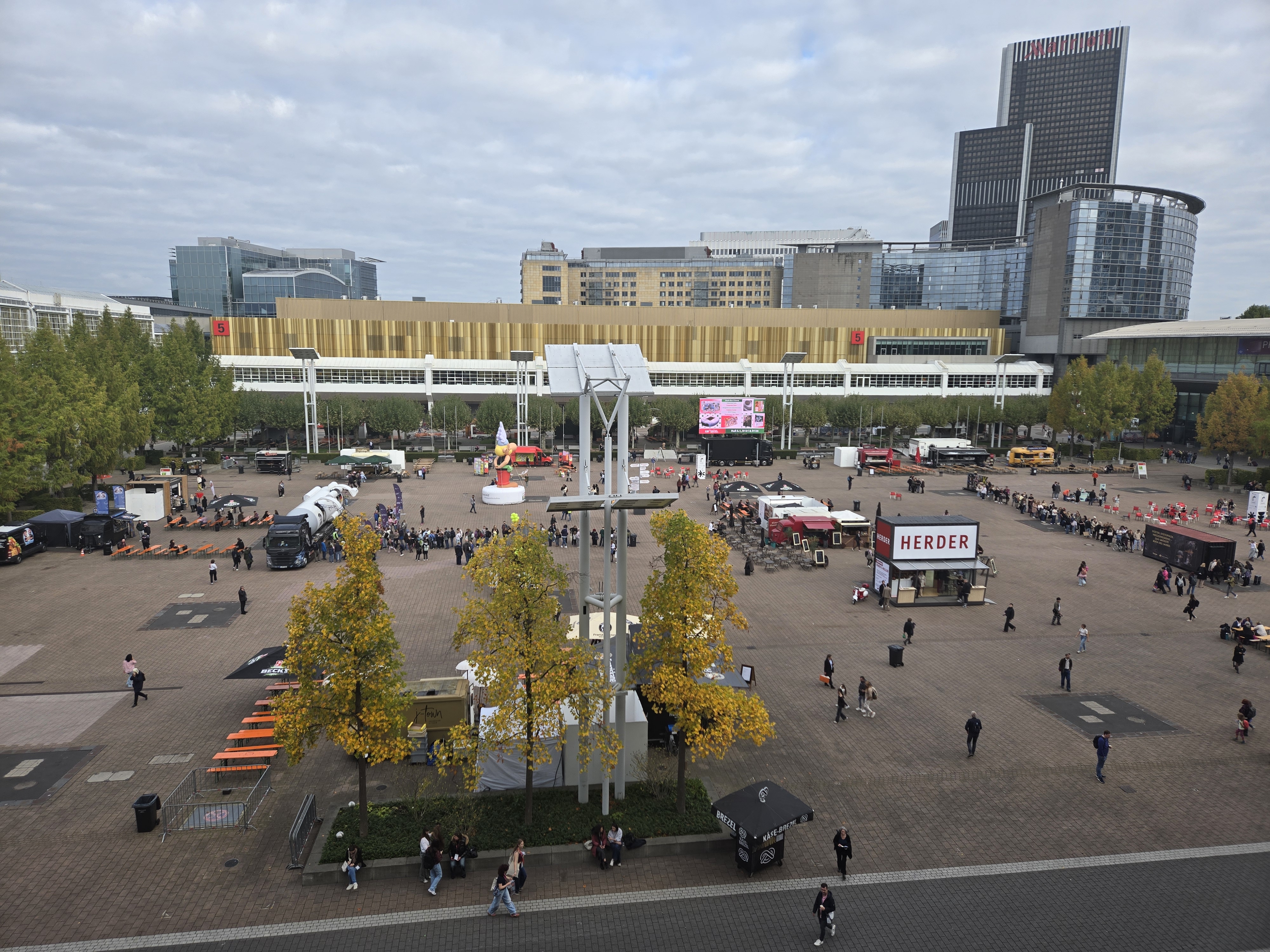
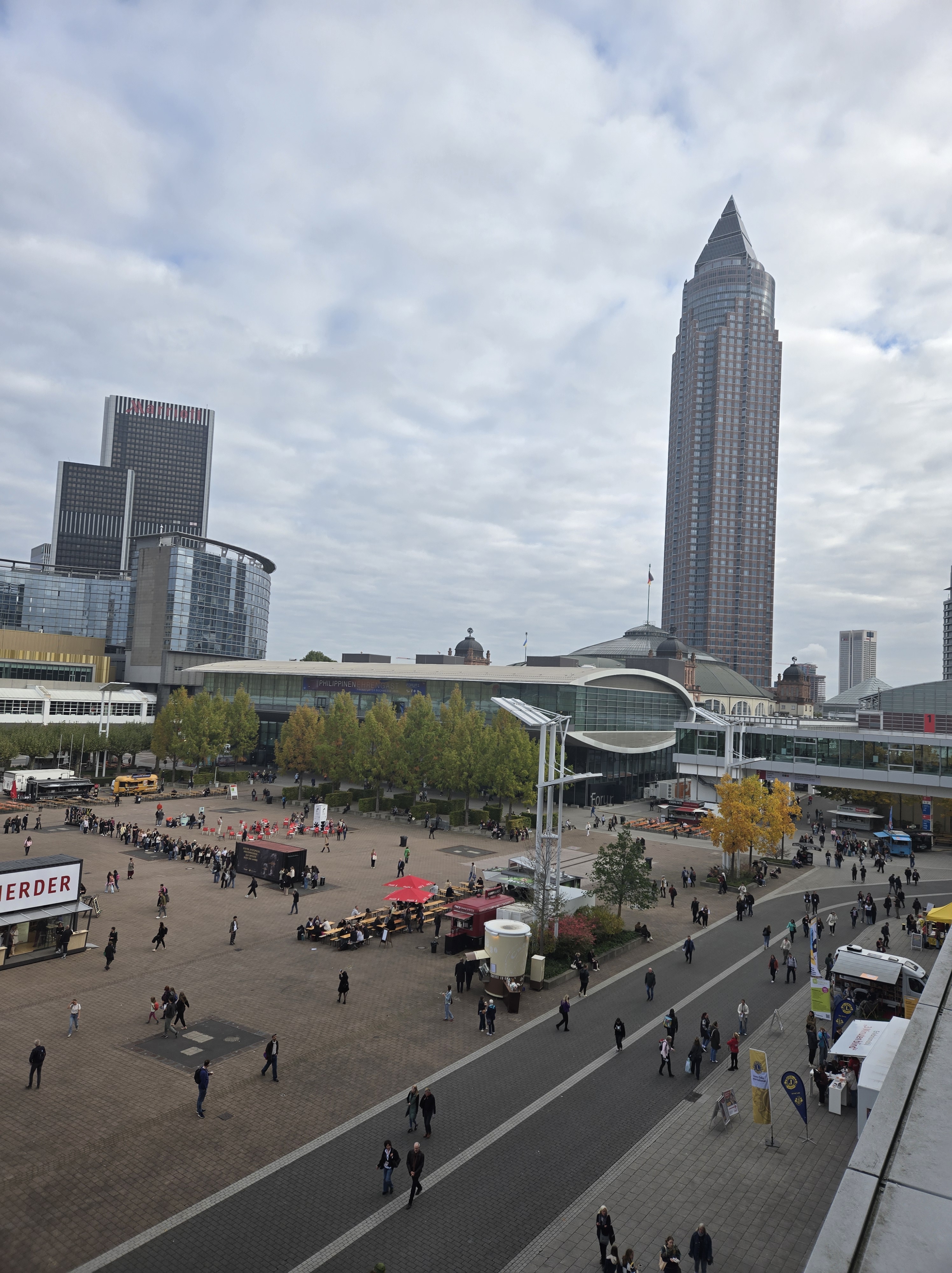
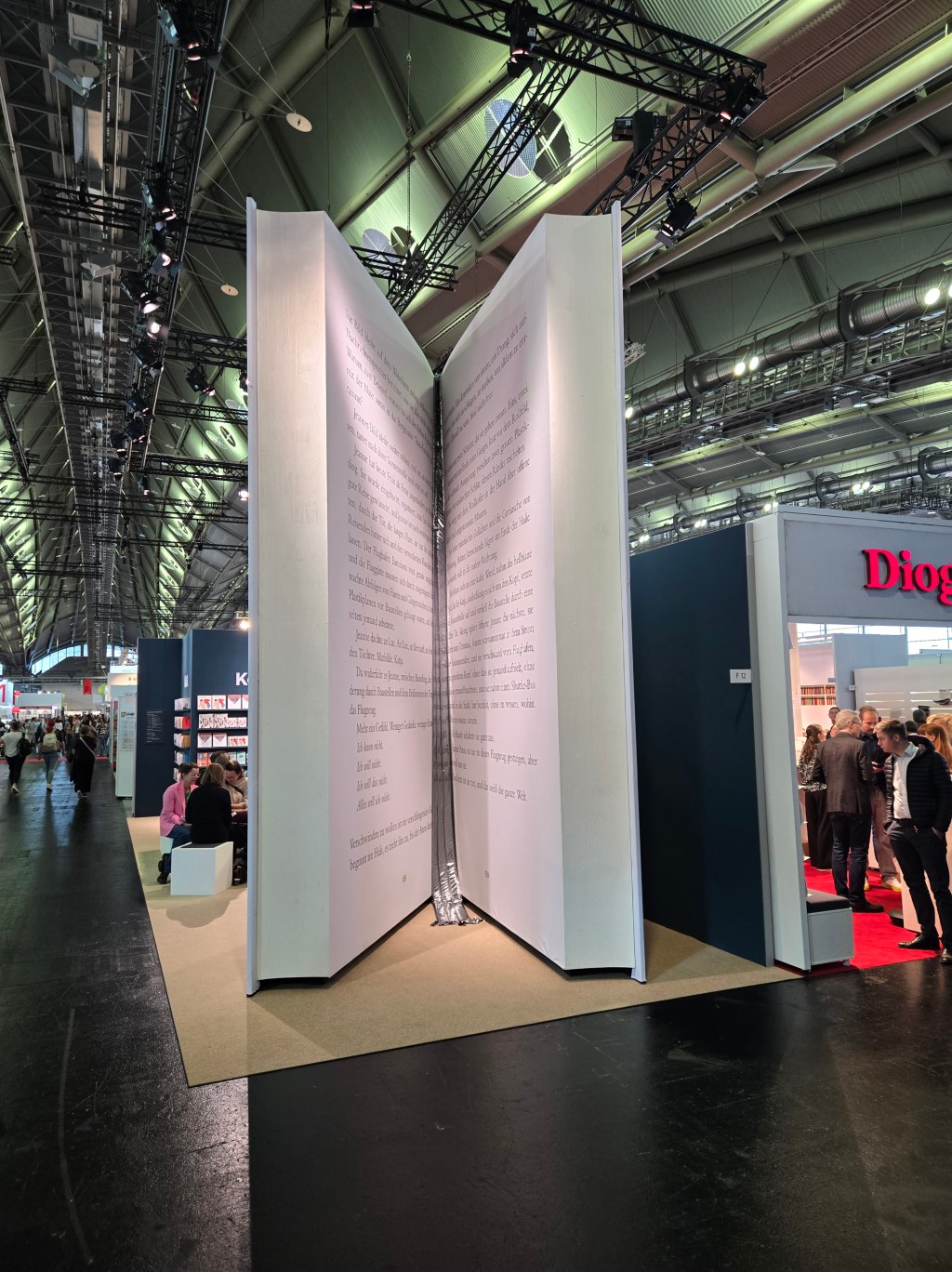
The fair is huge, overwhelming in fact, especially as a first time visitor. The Frankfurt Messe convention center has twelve halls. Hall 3 is as big or bigger than the dome where my college football team played. The book fair does not use all twelve halls, six is enough.

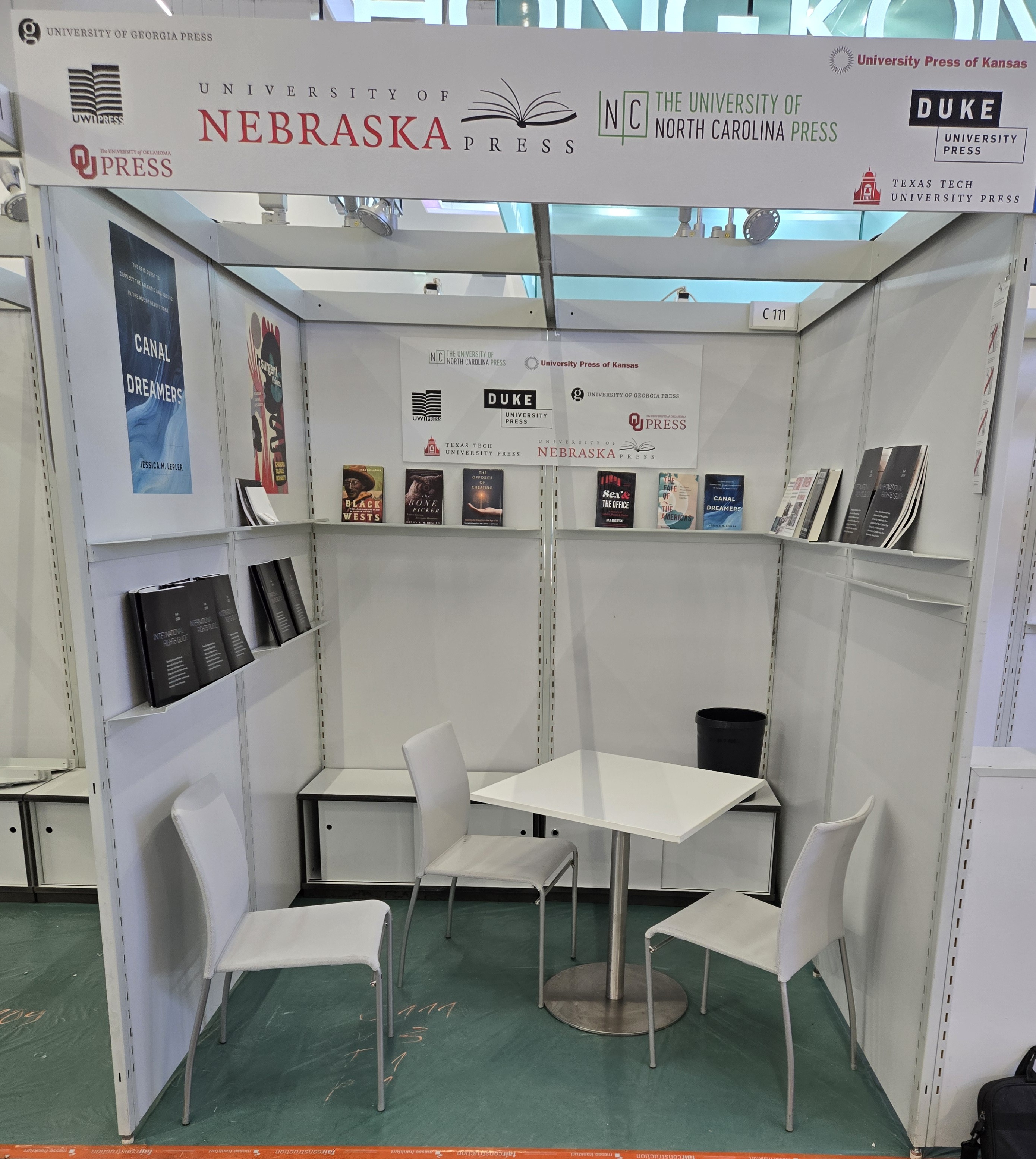
Nothing puts one’s place in the publishing world in perspective by walking around the halls. For example, here is my booth, which I was just 2 inches short of being able to touch both walls at the same time.
Now here is just part of Hong Kong Pavillion.

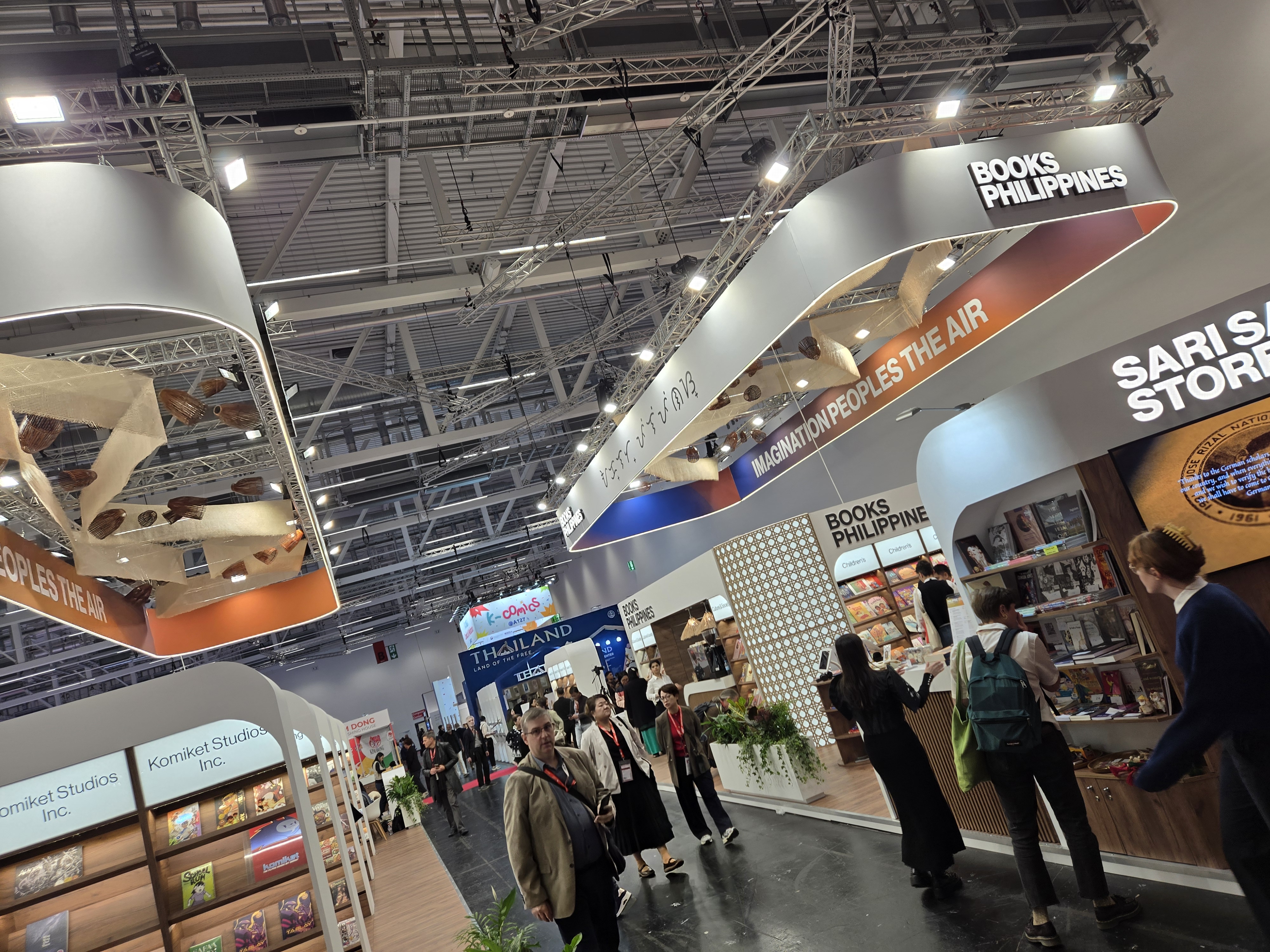
And here’s about half of Books Philippines (which had a stage that at the end of one day, held a rap concert).
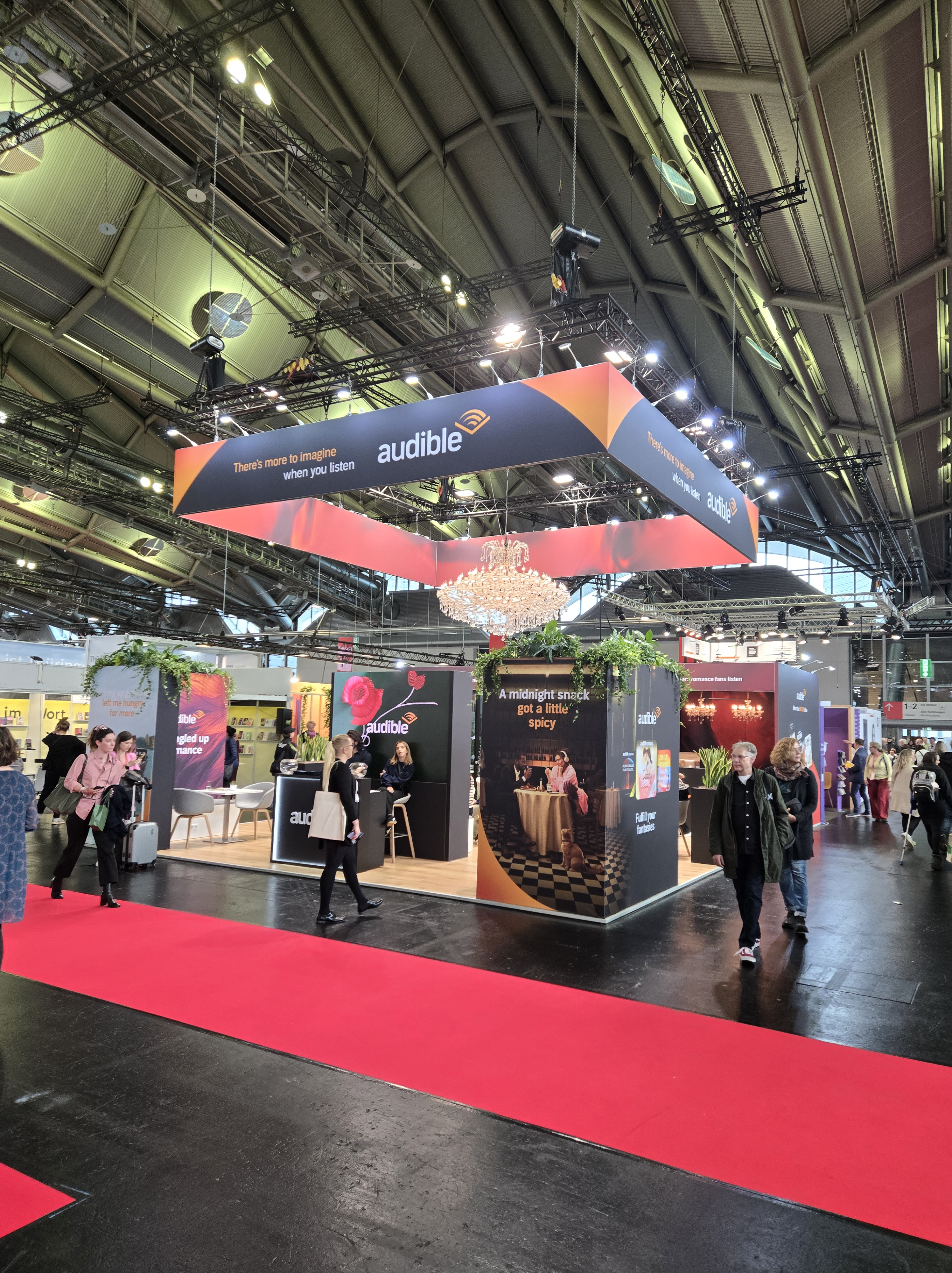
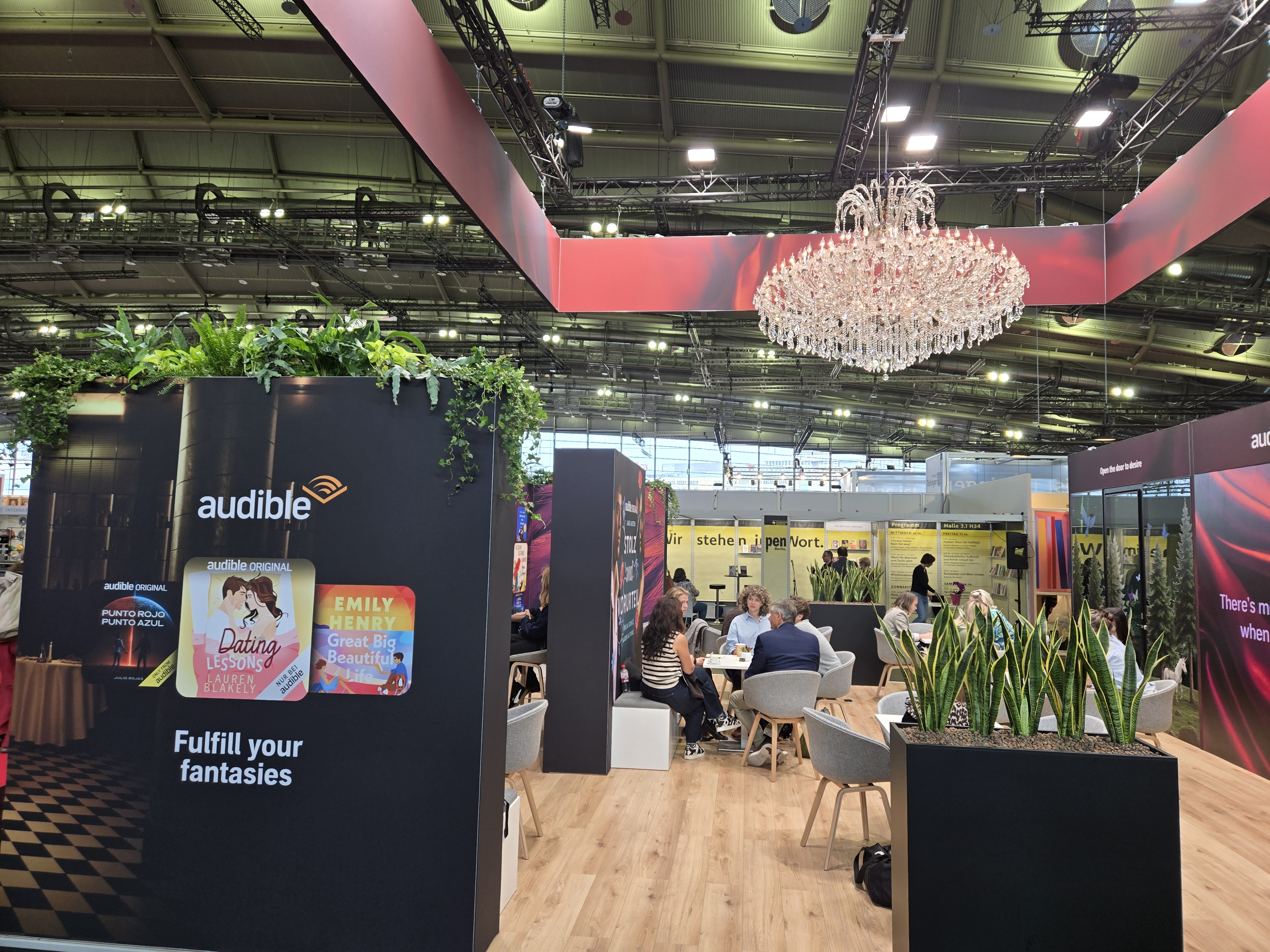
And naturally, Audible had a swanky “booth,” complete with numerous chandeliers. It also had a giant – maybe 12 foot tall – set of headphones set out in the center square, which I unfortunately did not get a picture of.
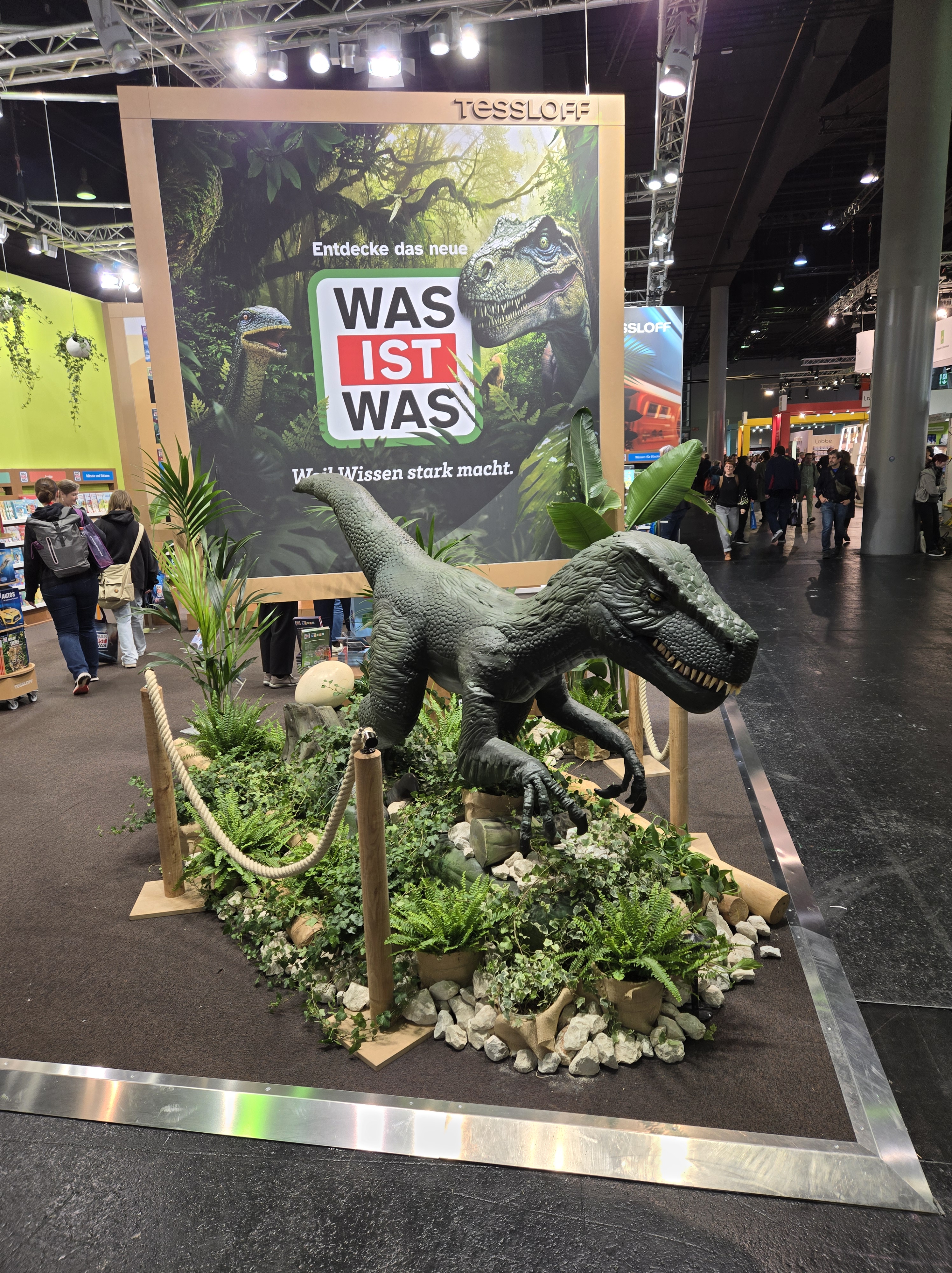
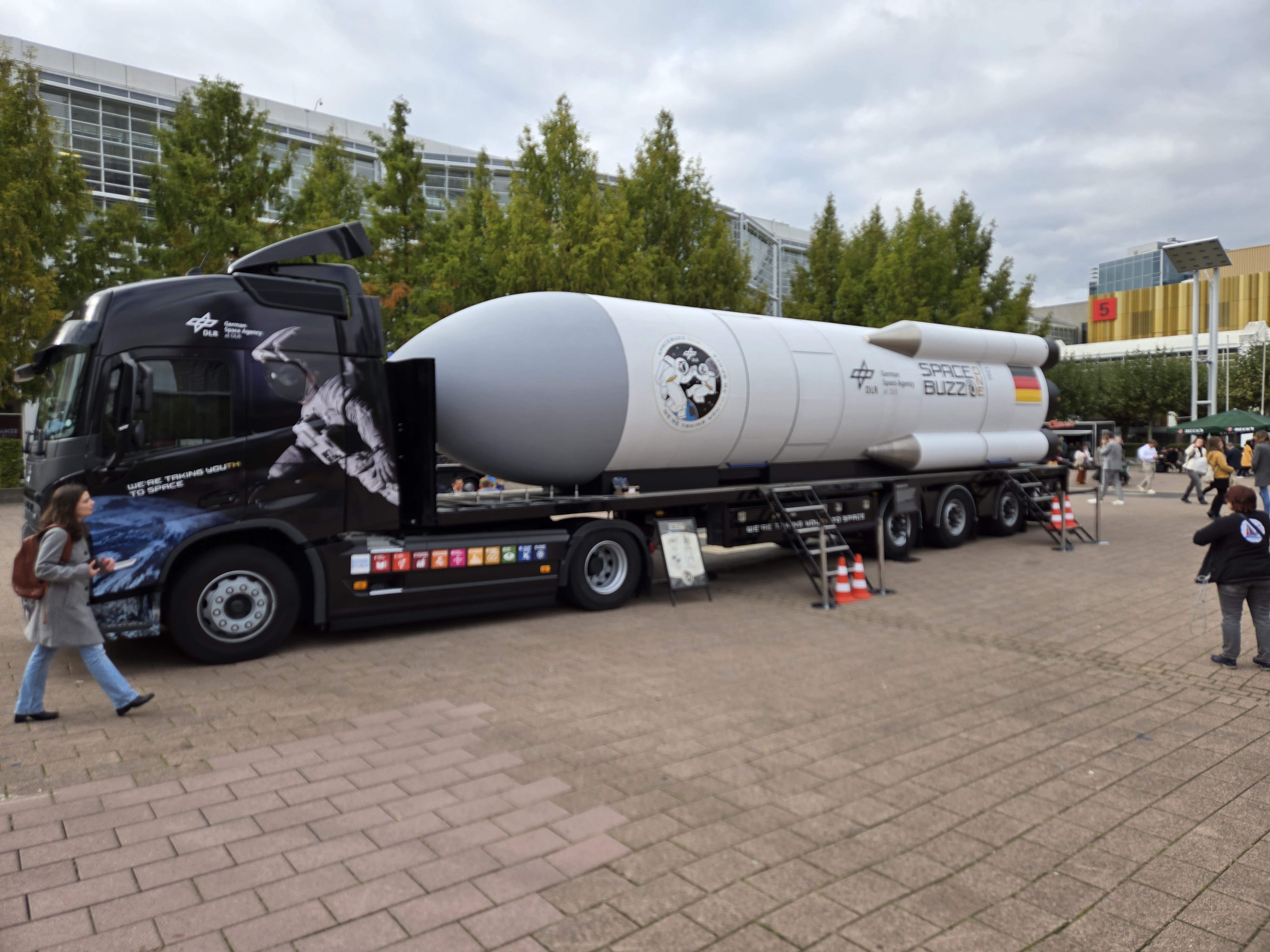
One of the world’s largest book fairs would not be complete, of course, without a mechanized dinosaur and a model rocket ship from the German Space Agency. (I sadly missed seeing the Gutenberg printing press).
The areas for Chinese, Spanish, French, and many other publishers, if not quite as excessive in their peacock strutting as Amazon, were still just as large as the Philippine and Hong Kong areas. The Saudi- and Emirate- based areas boasted private office spaces, coffee and beverage bars, couches, interactive kiosks, and plenty of meeting spaces.
Looking and working in the Duke space certainly reinforced how small of a part of the publishing ecosystem Duke occupies, even if we are a medium-large size prize in the American university press world.
The only low key area – from a spectacle standpoint – was the Literary Agents Center: one giant expanse of tables, chairs, and cubicle partitions where agents of all stripes met with publishers. It required either a special pass or a meeting on the calendar to get in, otherwise it would be overrun with prospective authors trying to sell their manuscript to anybody they could get to look at them. Here conversations took place that will lead to all sorts of rights contracts, whether blockbuster deals in the five, six, or maybe seven figures, or something more modest, where $400 will buy the rights to translate and sell an academic English-language book into Vietnamese.
Despite the size of the company or country Frankfurt’s attendees worked for or the publisher or author they represented, all of us were there to do one thing: get books out to the world. And this is no small feat. Publishing a book is hard. Distributing it is hard. Selling it is hard. Getting it into libraries is hard. Everything about the book industry is hard.
I met with one editor at a UK-based publisher that had recently survived an existential financial crisis. We talked about the difficulty of the industry at the moment, specifically about publishing nonfiction during a time in which wholesalers are going out of business (RIP Baker and Taylor), companies like Anthropic are stealing intellectual property to create LLM’s that are a drain on natural resources and can’t reliably spell blueberry, library budgets are being slashed, professors are no longer assigning full books, higher ed and academic freedom are under attack, and on and on. We couldn’t really think of a way out of all these difficulties. The best he could offer, and which I instantly agreed with, was “We’ll just keep going on. We’ll keep publishing books until we can’t anymore. What else are we going to do?”
What else are we going to do, indeed. If we were going to do something else, we wouldn’t be in Frankfurt that week, or at least not at the book fair – maybe for Eintracht Frankfurt’s Champion’s League match against Liverpool a few days after the fair’s conclusion. I felt this sense of forging on, of making and (hopefully) selling books in spite of the current difficulties, manifested in the largely positive energy and friendliness of everybody I met with, whether in my business meetings or casual interactions. It was a joy to meet people I had only interacted with over email – people from Taiwan and Korea and Japan and Turkey and Indonesia and South Africa and all throughout Europe. Even though Chinese publishers weren’t paying as much for translation rights for academic books as they were ten years ago or the economies in some European countries made selling translation rights more difficult, there was an enthusiasm for sharing the books and authors we were there to talk about. We were all book nerds and we were all there to commiserate in our nerddom.
Now, was everybody happy? No, I had one meeting that didn’t go well, but that’s business, and business means making hard decisions, even if we are all there for more or less the same reasons. Did I bitch about work things to colleagues? Of course, because that’s what you do, because sometimes work sucks. Even so, I left the fair feeling relatively good, if not hopeful, about the future of publishing, primarily because being part of the energy created by so many thousands of people made me feel that I was in the right business, that books are still important, and even though there are existential crises to be faced on many fronts, so many determined and creative people could not be stymied.
Do I sound like a pollyanna? For people who know me well, they would probably ask “where’d the brutally cynical Chris go and who is this alien wearing the Chris suit?” Maybe I am a pollyanna. Maybe my (probably temporary) optimism is colored by my first time going to the fair, my first time being on the continent, eating a fantastic mall food court kebab, the overwhelming sensory book overload, and meeting so many wonderful people. But, I do know that my head is not in the sand. I am more paranoid than most. I can think of more than enough reasons why my particular corner of publishing is teetering on the brink. But for the moment, I’m going to try and let all that sit in the background and do my best to make bunch of translation deals and to help get more books into the hands of people all over the world.

 The Turnaround
Leave a reply to Joyce Harrison Cancel reply